








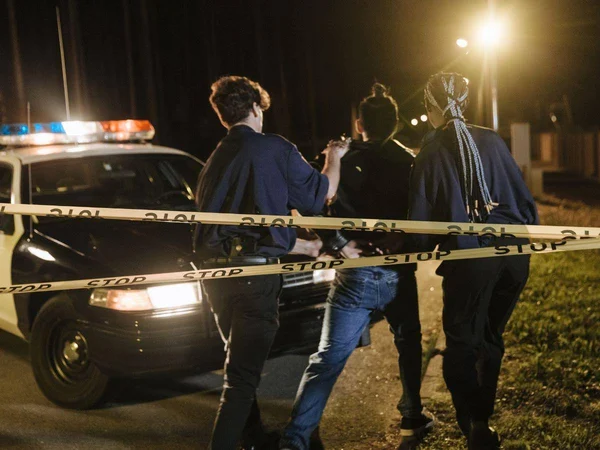
A violent crime arrest changes the temperature of a person’s life in minutes. The phone calls get shorter, family members panic, and every small detail suddenly feels dangerous because it may be used in court. In the United States, violent crime defense is not about a lawyer giving a loud courtroom speech after everything has already gone wrong. It starts earlier, in the quiet space where facts are checked, police choices are tested, and the first version of the story is refused until it earns trust.
People searching for legal guidance often need plain answers, not fear. Reliable public resources, legal education platforms, and community information hubs such as trusted legal news resources can help readers understand why early decisions matter when felony charges involve assault, robbery, homicide, domestic violence, or weapons allegations.
The hard truth is simple. Prosecutors do not need a perfect case to scare someone into a plea. They need pressure, confusion, and a defendant who does not understand what can still be challenged.
How Violent Crime Defense Starts Before Trial
The strongest defense often begins long before a jury sees the inside of a courtroom. Top criminal lawyers know that early movement can reshape the entire case, because police reports, witness statements, body camera footage, and forensic claims all start aging the moment charges are filed.
Why Early Case Review Changes the Direction
A good lawyer does not accept the arrest report as the truth. That report is one person’s version of what happened, usually written by law enforcement after emotions were already high. The defense has to slow the whole thing down and ask what was seen, what was assumed, and what was missing.
This matters most in felony charges where the first story sounds worse than the full story. A bar fight may be charged as aggravated assault because someone used a bottle. A domestic argument may become a weapons case because an object sat nearby. A robbery charge may rest on a rushed identification made under stress.
Top lawyers look for the pressure points first. They review the timing of the arrest, the wording of witness statements, the officer’s reason for stopping or searching someone, and whether the accused person spoke before understanding their rights. A small mistake at this stage can become the crack that weakens the prosecution’s entire case.
How Criminal Defense Strategies Protect the Record
Strong criminal defense strategies are not built on denial. They are built on records. A lawyer wants copies of 911 calls, dispatch logs, surveillance videos, medical reports, jail calls, and any digital messages tied to the accusation.
That work sounds ordinary, but it can change everything. A witness who sounded certain in court may have sounded confused in the first call to police. A video may show that the accused person backed away before contact happened. A text message may show threats from the alleged victim that never appeared in the police report.
The counterintuitive part is that silence can help more than a dramatic explanation. Many accused people want to “clear things up” right away. Experienced lawyers usually see danger there. A scared person can misstate one detail, and that single sentence may follow them for months.
Challenging the Evidence Behind the Allegation
Evidence is powerful only when it survives pressure. Prosecutors may present photos, weapons, medical records, fingerprints, DNA, phone data, or witness statements as if they speak for themselves. They do not. Evidence always arrives through people, procedures, and assumptions.
When Evidence Suppression Becomes the Turning Point
Evidence suppression can become the center of a violent crime case when police crossed a constitutional line. The Fourth Amendment protects people from unlawful searches and seizures, while the Fifth Amendment protects against forced self-incrimination. Those protections are not courtroom decorations. They decide whether certain proof can be used.
A weapon found during an illegal search may be challenged. A statement taken after a suspect asked for a lawyer may be attacked. Evidence collected without a proper warrant may create a serious fight over admissibility. The goal is not to hide truth. The goal is to keep the government inside the rules it must follow.
One real-world example is a late-night traffic stop that turns into a search after an officer claims to smell marijuana or see suspicious movement. If the reason for the stop was weak, or the search went beyond what the law allowed, the defense may ask the judge to exclude what was found. That can shift a weapons or assault case fast.
Why Forensic Claims Are Not Always Final
Forensic evidence sounds scientific, so jurors may trust it too quickly. Top lawyers do not. They ask who collected it, how it was stored, whether contamination was possible, and whether the lab result says as much as the prosecution claims.
DNA on clothing does not always prove an attack. Fingerprints on an object do not prove when it was touched. Gunshot residue may show contact with particles, but it does not always prove who fired a weapon. Medical injuries can support a prosecution theory, yet they can also fit a defensive act, a fall, or a chaotic struggle.
Evidence suppression and forensic review often work together. If police handled physical proof carelessly, the defense may not need to prove innocence in one clean stroke. It may only need to show that the state’s version rests on weak handling, rushed conclusions, or missing links.
Building a Human Story Without Excuses
A violent crime charge can flatten a person into one ugly word: defendant. Top criminal lawyers fight that flattening. They do not ask judges or juries to ignore harm. They ask them to see the whole situation, because context often decides whether the charge fits.
How Self-Defense Claims Are Framed Carefully
Self-defense claims demand discipline. A lawyer cannot throw the phrase around and hope it works. The defense has to show why the accused person believed force was needed, what threat existed, how close the danger was, and whether the response matched the moment.
In many U.S. cases, the details decide the outcome. Who moved first? Who had the weapon? Was there a safe way to leave? Did the alleged victim make threats before the encounter? Did the accused person call for help afterward? Those facts matter because self-defense is rarely clean in real life.
The unexpected insight is that anger does not automatically defeat a defense. A person can be angry and still afraid. A person can use rough language and still respond to a real threat. Skilled lawyers know how to separate bad optics from legal meaning, which is often where juries need the most guidance.
Why the Defendant’s Background Can Matter
A person’s background does not erase an accusation, but it can explain behavior that looked suspicious at first. Trauma history, prior threats, neighborhood conflict, military experience, intoxication, panic, or past abuse may affect how someone reads danger.
Criminal defense strategies often include mitigation work even when the defense is fighting the charge itself. Lawyers may gather employment records, counseling history, school records, family statements, or proof of community ties. This material can matter during plea talks, bail hearings, sentencing, and trial preparation.
A quiet example says a lot. A man accused of assault may have stayed at the scene because he thought leaving would look guilty. Another person may have fled because past police contact made them panic. Neither fact proves innocence, but both can challenge the lazy assumption that behavior after an incident always means guilt.
Negotiation, Trial Pressure, and the Decision to Fight
Most criminal cases do not end in a full jury trial. That does not make trial preparation less important. It makes it more important. Prosecutors tend to offer better terms when they know the defense is ready to expose weak proof in open court.
How Felony Charges Are Reduced or Reframed
Felony charges carry heavy consequences, including prison exposure, loss of gun rights, immigration problems, housing barriers, and employment damage. Top lawyers look for ways to narrow the case before those consequences become permanent.
A robbery charge may be reduced if the evidence of force is thin. Aggravated assault may be challenged if the weapon theory is weak. Attempted murder may be attacked if intent cannot be proven beyond a reasonable doubt. Domestic violence allegations may change if witness accounts conflict with medical findings.
Good negotiation is not begging. It is pressure with paperwork behind it. A defense lawyer walks into talks with facts, motions, witness problems, and trial risks the prosecutor cannot ignore. That is how a case moves from fear to strategy.
When Trial Is the Better Path
Trial is risky, expensive, and emotionally draining. Still, some cases need a jury because the offer is unfair, the evidence is weak, or the accusation carries a label the accused person cannot accept. A strong trial lawyer prepares for that moment from day one.
Trial work is not theater first. It is structure. Lawyers choose which witnesses to challenge, which facts to admit, which police choices to question, and which parts of the state’s story deserve the most attention. The best cross-examination often feels simple because the hard work happened before anyone stood up.
Self-defense claims, mistaken identity, unreliable witnesses, and flawed forensic evidence can all become trial themes. The defense does not need to prove every unknown. It needs to show reasonable doubt, and reasonable doubt often grows from the details prosecutors hoped no one would study closely.
Conclusion
A violent crime case is not won by panic, pride, or blind trust in the first police report. It is won through patience, pressure, and a defense team willing to test every part of the government’s story before accepting any outcome. The smartest move is usually not the loudest one. It is the earliest one.
For anyone facing this kind of charge in the United States, violent crime defense should begin with one clear rule: do not explain your way into deeper trouble before a lawyer reviews the facts. The case may involve witnesses, video, forensic proof, constitutional issues, or negotiation options that are invisible at first.
The next step is simple and urgent. Speak with a qualified criminal defense lawyer in your state before making statements, accepting a plea, or assuming the prosecution’s version is the only version that matters.
Frequently Asked Questions
What are the most common violent crime defense strategies?
Common defenses include self-defense, mistaken identity, lack of intent, unreliable witnesses, illegal search, false accusation, and weak forensic proof. The right strategy depends on the charge, the evidence, state law, and what prosecutors must prove beyond a reasonable doubt.
Can felony charges be reduced before trial?
Yes, felony charges may be reduced through negotiation, motions, witness problems, evidence issues, or proof that the original charge overstates what happened. A reduction is more likely when the defense can show legal risk for the prosecution.
How do self-defense claims work in assault cases?
Self-defense usually depends on whether the accused person reasonably believed force was needed to prevent harm. Courts often examine who started the encounter, whether retreat was required, how serious the threat was, and whether the response fit the danger.
What happens if police collected evidence illegally?
A defense lawyer may file a motion asking the judge to suppress that evidence. If the judge agrees, prosecutors may lose access to key proof, which can weaken the case, improve plea terms, or sometimes lead to dismissal.
Are witness statements enough for a conviction?
Witness statements can support a conviction, but they are not automatically reliable. Stress, poor visibility, bias, intoxication, fear, and memory gaps can affect what a witness says. Defense lawyers often compare statements against video, timelines, and physical evidence.
Why does early legal help matter after an arrest?
Early legal help protects the accused person from harmful statements, missed deadlines, lost evidence, and rushed plea decisions. A lawyer can request records, preserve video, contact witnesses, and begin challenging weak parts of the case before they harden.
Can violent crime cases be dismissed?
Yes, dismissal can happen when evidence is weak, witnesses fail, constitutional violations occur, or prosecutors cannot prove the charge. Dismissal is never guaranteed, but a strong defense can expose problems that make prosecution difficult.
Should someone talk to police to explain their side?
No one should speak to police about a violent crime accusation without legal advice. Even honest explanations can be misunderstood, shortened, or used against the person later. A lawyer can decide when, how, or whether any statement should be made.